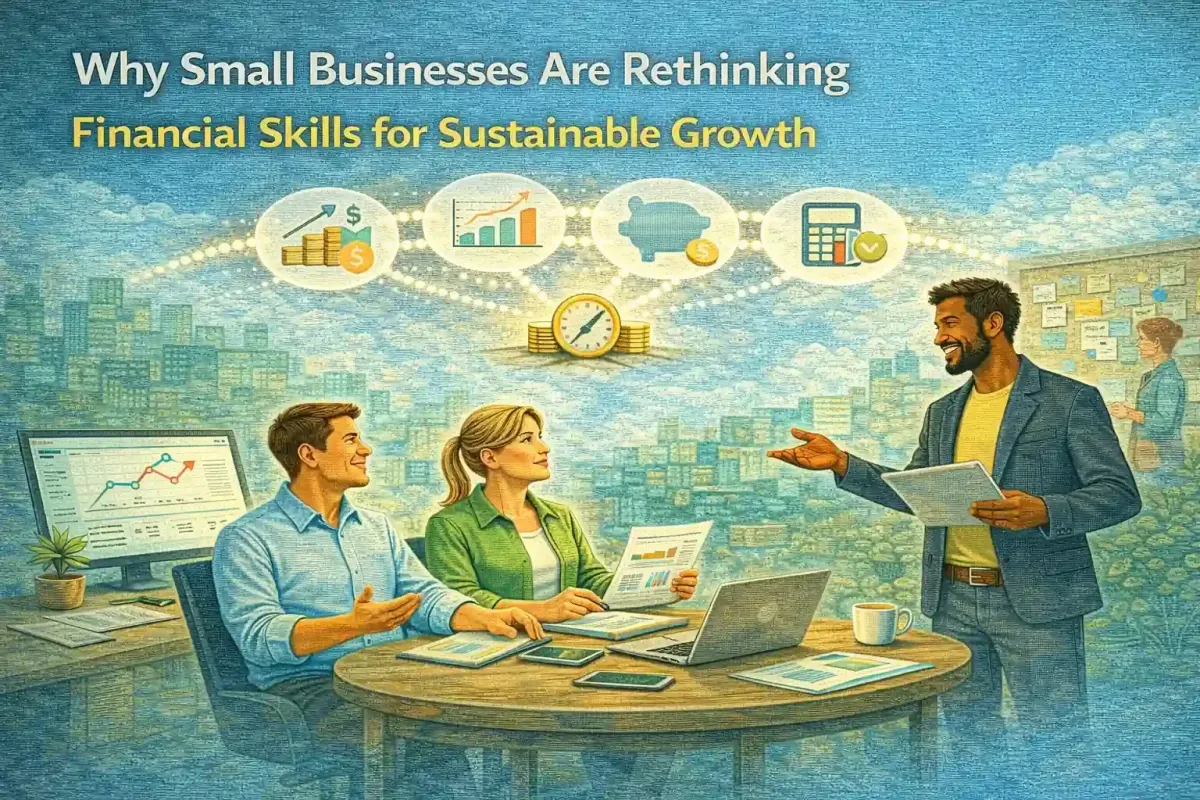
Why Small Businesses Are Rethinking Financial Skills for Sustainable Growth
Running a small business has never been only about selling a good product or service. For many owners, sustainability now hinges on quieter capabilities: understanding cash positions, planning months ahead, and making decisions without constant financial stress. These skills rarely appear in business origin stories, yet they increasingly determine which companies endure.
At GNR Media, conversations with founders often circle back to the same issue. Marketing visibility may open doors, but financial clarity decides whether growth is manageable or exhausting. Sustainable businesses tend to treat financial literacy as an operational skill, not an afterthought, aligning it with marketing, systems, and long-term planning, as explored in GNR Media’s marketing insights.
Financial literacy as an operational skill
Financial literacy is often misunderstood as bookkeeping or compliance. In practice, it is closer to situational awareness. Owners who understand their numbers can respond calmly to change, whether that change is a slow quarter, a sudden opportunity, or rising costs. This awareness supports sustainability because it reduces reactive decision-making.
Small businesses with strong financial skills usually build simple, repeatable habits. They review cash flow regularly, separate short-term obligations from long-term goals, and avoid tying personal security entirely to monthly revenue. Over time, these habits create stability that marketing alone cannot provide, even when demand fluctuates.
Sustainability beyond revenue growth
Revenue growth is seductive, but it does not automatically equal sustainability. Businesses can grow themselves into fragility by expanding faster than their financial systems can support. Sustainable growth requires deliberate pacing and a clear view of margins, buffers, and future commitments.
This is where structured guidance can quietly support business health without becoming promotional. For example, some owners reference external perspectives, such as frameworks discussed on professional sites like Marisa Punshon’s platform, when reflecting on topics like cash flow management coaching in an Australian small business context. The reference functions as background reading rather than instruction, helping owners think more clearly about resilience without outsourcing responsibility.
Within the GNR Media ecosystem, this thinking aligns closely with how marketing and finance intersect. Visibility attracts opportunity, but financial structure determines which opportunities are safe to accept. Sustainable businesses learn to say no with confidence, guided by numbers rather than fear.
Long-term stability as a competitive advantage
Long-term stability also reshapes daily decision-making. When owners are not forced to chase every short-term win, they can choose clients, projects, and partnerships more selectively. This selectivity reduces operational strain and improves consistency. Over years, not quarters, the cumulative effect is a business that feels predictable rather than precarious, allowing leaders to focus on quality, learning, and measured expansion.
Stability, in this sense, is built intentionally through repeated choices that favor clarity over speed and resilience over impulse long term.
Over time, stability becomes its own advantage. Businesses that understand their financial position can invest steadily in marketing, staff, and systems without dramatic swings. They weather uncertainty better, retain trust with partners, and avoid burnout at the leadership level.
This approach reflects a broader shift in how small businesses define success. Sustainability is no longer framed as stagnation or caution. Instead, it is seen as the ability to grow deliberately, supported by skills that keep the business healthy across seasons. Financial understanding, when integrated with thoughtful marketing strategy, becomes less about control and more about confidence.
GNR Media continues to observe that the most durable brands are not the loudest. They are the ones built on steady decisions, clear information, and respect for limits. In that sense, sustainability is not a constraint on growth, but the structure that allows growth to last.