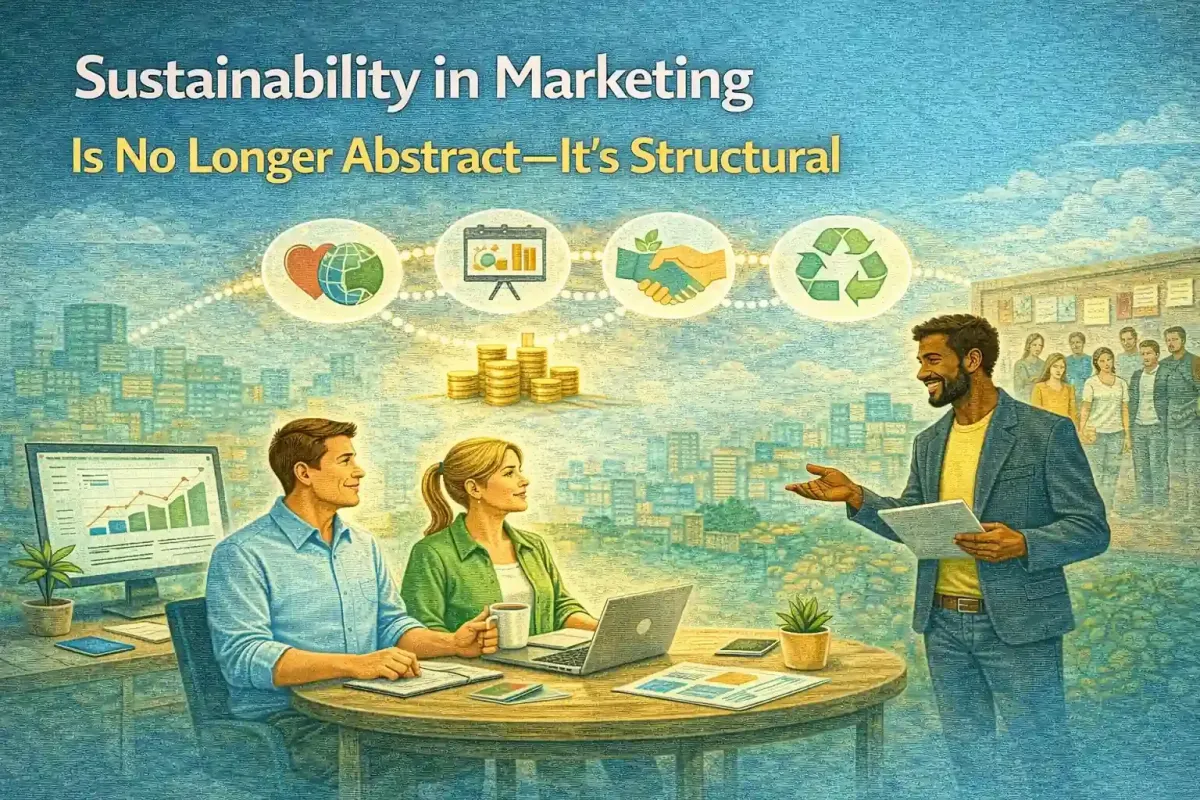
Sustainability in Marketing Is No Longer Abstract—It’s Structural
Marketing systems don’t exist in a vacuum. They sit inside businesses that employ people, pay suppliers, and try to remain viable through unpredictable cycles. For growth-focused teams, especially smaller operators, sustainability isn’t a slogan; it’s a daily constraint. Long-term thinking has become less about lofty mission statements and more about whether systems, partnerships, and decisions can hold up when conditions tighten.
GNR Media has built its platform around that practical reality. By consolidating SEO, backlinks, social media, and automation into a single operational layer, it reflects a broader shift in how businesses think about resilience: fewer disconnected tools, clearer strategy, and communities that share learning rather than chase quick wins.
Why sustainability has become operational, not ideological
For many small and mid-sized businesses, sustainability now shows up as operational discipline. It’s visible in how marketing budgets are allocated, how teams are structured, and how growth expectations are paced. The past decade rewarded speed; the next will likely reward coherence.
Marketing platforms that prioritise systems over tactics support this shift. When visibility, audience engagement, and analytics are managed together, decision-making slows to become deliberate. That space matters. It allows businesses to assess not only what drives traffic today, but what supports stability next year.
This is also where content strategy has evolved. Educational resources, peer-led discussion, and long-form thinking are increasingly valued because they reduce dependency on constant reinvention. An internal guide on integrated marketing workflows, for example, becomes an asset that compounds over time rather than an expense that expires. Platforms that publish this kind of material, including GNR Media’s own resources at https://gnrmedia.global/services, signal a preference for durability over novelty.
The quiet role of alignment in long-term planning
Sustainability is often discussed in environmental or ethical terms, but for business owners it frequently begins with alignment. When marketing activity aligns with operations, staffing capacity, and financial planning, the business becomes easier to manage under pressure.
This alignment extends outward as well. Many companies are re-evaluating how their growth connects to the wider economy, particularly in local and community contexts. The question is no longer whether a business “does good,” but whether its structure allows it to contribute meaningfully without destabilising itself.
Within this context, frameworks around sustainability and social impact have become part of strategic planning rather than peripheral initiatives. For Australian businesses in particular, conversations around sustainability and social impact have shifted from symbolic gestures to structured participation, where corporate responsibility is embedded into planning rather than handled as an afterthought.
Sustainability as a feedback loop, not a destination
One of the less discussed aspects of sustainability is feedback. Businesses that endure tend to build loops where data, community response, and operational outcomes inform one another. Marketing plays a central role here, because it sits at the intersection of message and measurement.
When platforms encourage visibility into performance—what content resonates, which partnerships last, where engagement drops—they enable adjustment before crisis. This is especially relevant for small businesses that lack large buffers. Sustainability, in this sense, is not about reaching a stable end state, but about maintaining the ability to adapt without burning out teams or resources.
Growth platforms that emphasise clarity over acceleration quietly support this model. They don’t promise immunity from volatility, but they reduce unnecessary friction. Over time, that reduction can be the difference between a business that contracts under strain and one that recalibrates and continues.
Long-term thinking rarely announces itself. It shows up in fewer emergencies, steadier teams, and systems that can absorb change. In marketing, as in business more broadly, sustainability is increasingly defined by what holds, not what spikes.