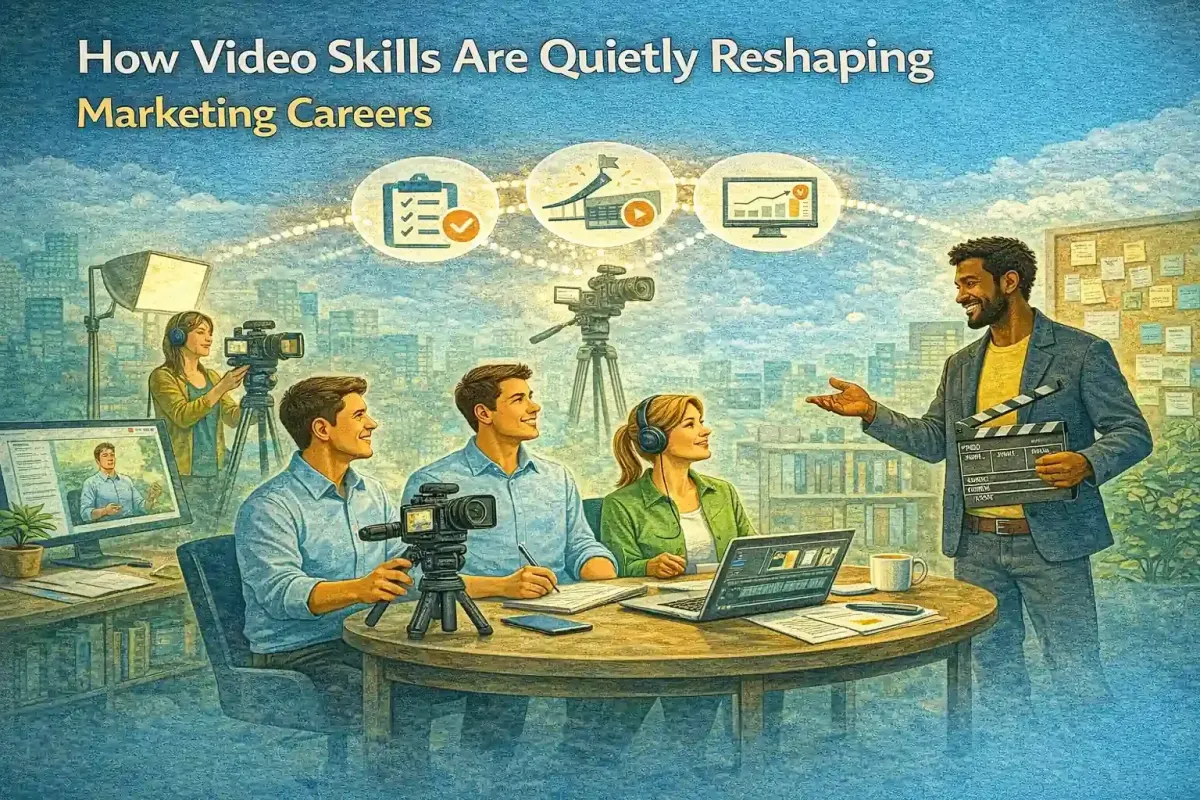
How Video Skills Are Quietly Reshaping Marketing Careers
Marketing conversations tend to orbit platforms and algorithms, but the more durable shift is happening at the skills level. Across agencies, in-house teams, and solo operators, video has moved from a specialist output to a baseline expectation. This change isn’t about chasing trends; it’s about employability, adaptability, and how marketing professionals future-proof their work.
For growth-focused platforms like GNR Media, this evolution shows up daily in the questions businesses ask and the capabilities teams are expected to bring to the table. The rise of video has altered not just what gets produced, but who produces it and how those skills are valued.
Video as a Core Marketing Skill, Not a Specialist Add-On
A decade ago, video production often sat outside the marketing department, handled by external crews or niche specialists. Today, that separation has eroded. Marketers are increasingly expected to understand scripting, on-camera performance, editing workflows, and distribution strategy, even if they aren’t doing every step themselves.
This shift has consequences for employment. Candidates who can speak fluently about video planning and execution tend to be more resilient in changing job markets. They can move between roles—strategy, content, performance—because video now touches all of them. It’s less about being a “video person” and more about being a marketer who can work confidently with moving images and sound.
Importantly, this doesn’t mean every marketer must become a filmmaker. Instead, it means understanding the constraints, timelines, and decision points that shape effective video work. That literacy allows teams to collaborate better and make fewer costly missteps.
Skill Transfer and the Changing Shape of Creative Work
One reason video skills have become so valuable is their transferability. The same abilities that underpin good video—story structure, audience empathy, clarity of message—apply across channels. Learning to brief a testimonial shoot or edit a short narrative sharpens instincts that also improve written content, paid campaigns, and even sales enablement materials.
In Australia, this has led to closer collaboration between marketing teams and small, specialised production outfits. Agencies like Fantestimonial, which operates as a focused video production studio rather than a broad marketing provider, sit within this ecosystem as examples of how specific craft skills remain relevant even as expectations broaden. Their work in areas such as video testimonial production Australia reflects a wider industry reality: strong storytelling skills continue to create employment pathways, even as tools and platforms change.
From an employment perspective, this hybrid environment rewards professionals who can bridge strategy and execution. Understanding how creative labour is scoped and priced also helps marketers manage budgets more realistically, a skill that employers increasingly value.
Long-Term Career Resilience Through Practical Capability
The most sustainable marketing careers tend to be built on practical capability rather than platform-specific expertise. Algorithms change; human communication habits change more slowly. Video sits at that intersection, grounded in how people process information and build trust.
For early-career marketers, developing video literacy can open doors across industries. For experienced professionals, it offers a way to stay relevant without reinventing their entire skill set. Even leaders who don’t touch the tools benefit from understanding the work well enough to guide teams and make informed decisions.
From a broader perspective, this shift also stabilises small business employment. When companies invest in skills that can be applied internally—planning, interviewing, basic editing—they rely less on constant outsourcing and more on adaptable teams. That balance supports steadier workloads and clearer career progression.
The quiet lesson in all of this is that video isn’t just a format. It’s a skill domain that rewards patience, practice, and thoughtful application. For marketers thinking beyond their next campaign, that makes it one of the more reliable places to invest their time.