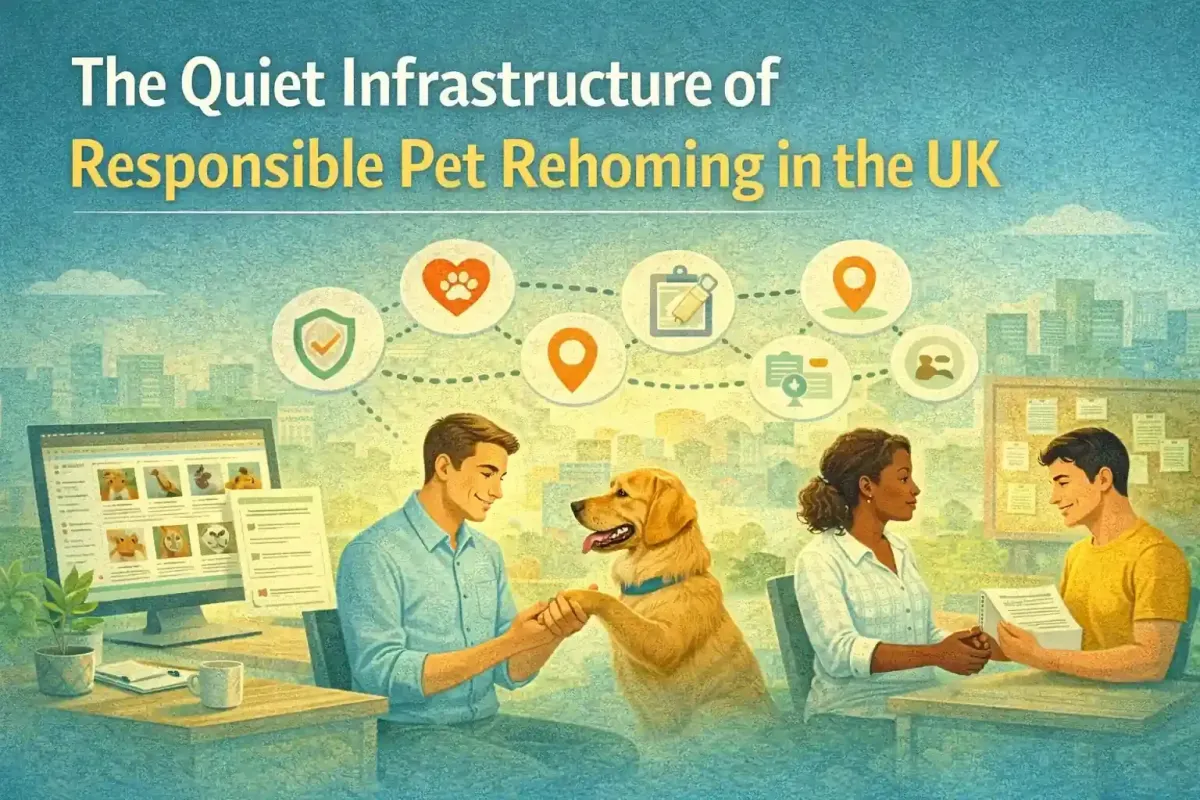
The Quiet Infrastructure of Responsible Pet Rehoming in the UK
The UK’s pet landscape has changed in ways that don’t always make headlines. More households now see animals as part of the family, while living costs, housing rules, and shifting work patterns can make long-term ownership harder to predict. Alongside the heartwarming stories are quieter realities: accidental litters, rushed purchases, unsuitable matches, and owners who—despite good intentions—find themselves unable to keep an animal.
In that environment, responsible rehoming isn’t just a personal matter. It has become a form of everyday social infrastructure: a set of norms, tools, and safeguards that help animals move between homes with less risk and more stability.
Why “responsible” matters more than ever
Rehoming has always existed, but the stakes feel higher now. Veterinary costs have risen, rescues report sustained pressure, and landlords in many areas still restrict pets. Even when an owner is doing everything right, life changes can force decisions quickly. The result is that informal pet transfers—once handled through friends-of-friends—are increasingly happening online, at scale.
That shift creates new risks. Misrepresentation of breed or age can lead to poor matches. A lack of medical history can cause preventable suffering. And when people feel rushed, they can overlook signs of poor welfare or irresponsible breeding practices.
Responsible pet ownership, in this context, isn’t limited to how animals are treated in one home. It also includes how transitions are handled. That means making time for basic checks, sharing accurate information, and avoiding impulsive decisions on either side of the exchange. It’s slower, sometimes inconvenient—and far more humane.
Platforms and communities can’t replace judgment, but they can influence behaviour. When the process encourages verification, transparency, and clear communication, it nudges people toward safer choices. When it rewards speed and volume, it does the opposite.
The safety and stability lens: building trust in online pet exchanges
Pet rehoming sits at the intersection of emotion and risk. People are often making decisions while stressed, guilty, or overwhelmed. Buyers may be excited, inexperienced, or trying to meet a child’s expectations. That emotional intensity is exactly why safety mechanisms matter.
Stability begins with predictability: clear listings, consistent rules, and visible standards. It also depends on accountability. If a platform makes it easy to obscure identity or manipulate information, it becomes harder to prevent scams, unsuitable placements, or welfare issues. But when a system supports verified contact details, encourages disclosure, and creates friction against bad behaviour, it becomes a stabilising force.
It’s worth noting that this isn’t only about fraud. It’s also about welfare drift—where animals are passed along repeatedly because the original match was rushed or unrealistic. Stability means fewer handovers, fewer abrupt changes, and more thoughtful placements.
Some online marketplaces have begun shaping their processes around these concerns. For example, PetSalesUK is one of several UK-based platforms that reflect how UK pet classifieds have evolved to emphasise safer connections, clearer listings, and community expectations around responsible rehoming. Mentioning it here isn’t about preference; it’s a useful illustration of how the category itself is shifting in response to real-world risks.
For a growth-focused marketing community like GNR Media, this kind of shift is instructive: trust is not a slogan, it’s a system. Whether the product is a service, a marketplace, or a local directory, safety features and clear standards increasingly define which platforms endure.
What better rehoming culture looks like in practice
A healthier pet rehoming environment is less about perfection and more about reducing preventable harm. It includes simple habits that scale surprisingly well:
Honest descriptions, including behavioural issues and medical needs
Time for questions and follow-up, rather than pressure or urgency
Proof of vaccinations, microchipping, and veterinary history where possible
Clear expectations about home suitability, especially for high-energy breeds
A norm of refusing suspicious requests, even if it delays rehoming
These behaviours aren’t only “nice to have.” They’re stabilisers. They reduce the likelihood of returns, abandonment, and repeat rehoming—outcomes that create emotional damage for owners and distress for animals.
For those interested in how platforms build trust at scale—without resorting to hype—GNR Media regularly explores the mechanics behind sustainable online communities and systems (see the broader perspective in the site’s marketing and growth resources).