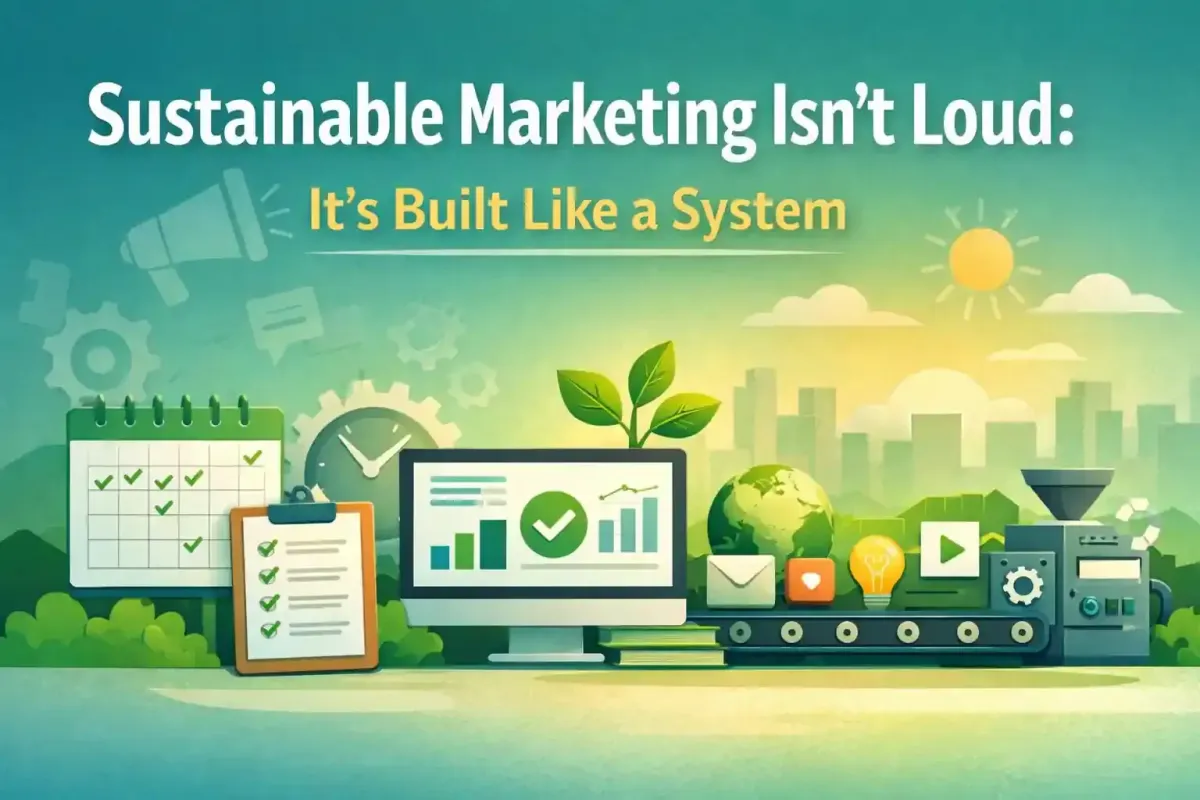
Sustainable Marketing Isn’t Loud: It’s Built Like a System
Marketing has become easier to start and harder to sustain. Tools are everywhere. Content can be produced quickly. Platforms promise reach in exchange for constant output. For many businesses, the initial surge feels exciting—new posts, new campaigns, new metrics to track. Then the fatigue sets in.
The problem is not a lack of ambition. It’s that marketing often gets treated as a series of sprints. And sprints, by definition, can’t last.
Growth-focused platforms like GNR Media sit in a space shaped by this reality: businesses want consistency without chaos. They want visibility that doesn’t rely on constant reinvention. The shift underway is subtle but important. The most resilient marketing strategies increasingly resemble operations—repeatable processes, clear inputs, measurable outputs, and routines that can be maintained.
Long-term planning: the difference between momentum and noise
Using the Long-term planning lens, marketing becomes less about short-term performance and more about durability.
Short-term wins are easy to celebrate and hard to build on. A campaign spikes traffic, then fades. A piece of content goes semi-viral, then disappears into the feed. A paid ad performs well until the audience saturates. These moments can be useful, but they don’t automatically create momentum.
Momentum comes from accumulation. It’s what happens when marketing efforts compound over time—when a brand’s message becomes recognisable, when content builds a library of trust, when search visibility strengthens through sustained relevance, when community engagement grows through steady presence rather than sudden bursts.
Long-term planning forces a different set of questions:
What can we produce consistently without burning out?
Which channels can we maintain without constant reinvention?
What is our “evergreen” message, beyond offers and promotions?
How do we make marketing work even when the business is busy?
These questions matter because most businesses don’t fail at marketing due to poor ideas. They fail due to inconsistency. Marketing is dropped when client work peaks. Content stops when a key person leaves. Reporting becomes irregular. The strategy becomes reactive.
This is where systems-based marketing platforms have gained traction. GNR Media, positioned as an all-in-one system for SEO, backlinks, social media, and automation, reflects the broader push toward marketing that can be run like infrastructure rather than improvisation. Their approach is outlined across their platform and community focus on GNR Media.
Why consistency is a sustainability issue, not a creative one
Creativity matters. But the bigger constraint for most businesses is not creativity—it’s capacity.
Marketing requires time, attention, and continuity. It also requires emotional energy: writing, editing, responding, analysing, iterating. When those demands pile on top of running a business, marketing becomes the first thing sacrificed. Not because it isn’t important, but because it feels non-urgent compared to immediate operational needs.
This is why sustainability has become a central concept in marketing operations. The goal is not to do “more.” The goal is to do what can be maintained.
A sustainable marketing system usually has a few defining traits:
a stable content cadence that matches real team capacity
clear ownership of tasks and approvals
repeatable workflows (templates, checklists, asset libraries)
automation for routine actions without losing brand voice
reporting that tracks trends, not daily fluctuations
Without these structures, marketing becomes brittle. It relies too heavily on individual effort. When that effort dips—due to illness, workload, stress—the whole system falters.
This is where long-term planning intersects with something many businesses overlook: the physical and cognitive health of the people doing the work.
The body still matters in a digital economy
Digital work is often described as “low impact.” But anyone who spends long hours at a desk knows that’s not true. Strain accumulates: tight shoulders, headaches, lower back discomfort, wrist pain, jaw tension. It’s not dramatic, but it’s persistent.
For professionals running marketing campaigns, content production, or client delivery, the work is mentally demanding and physically repetitive. When workloads spike—launch periods, reporting deadlines, content pushes—the body absorbs the intensity. Over time, this can reduce focus, increase fatigue, and shorten the window of sustainable output.
In city-based working environments, allied health clinics become part of the support ecosystem that keeps professionals functioning. A multidisciplinary practice such as Melbourne CBD Physiotherapy & Sports Medicine Clinic provides a contextual example, including access to myotherapy massage for muscular tension and repetitive strain patterns that commonly develop in desk-based roles. This is not promotional; it’s a practical reflection of what long-term performance often requires: recovery infrastructure.
Sustainable marketing isn’t just a strategy choice. It’s a structural choice. The brands that grow steadily tend to build marketing systems that can survive busy seasons, staff changes, and shifting conditions—without collapsing under the weight of constant urgency.