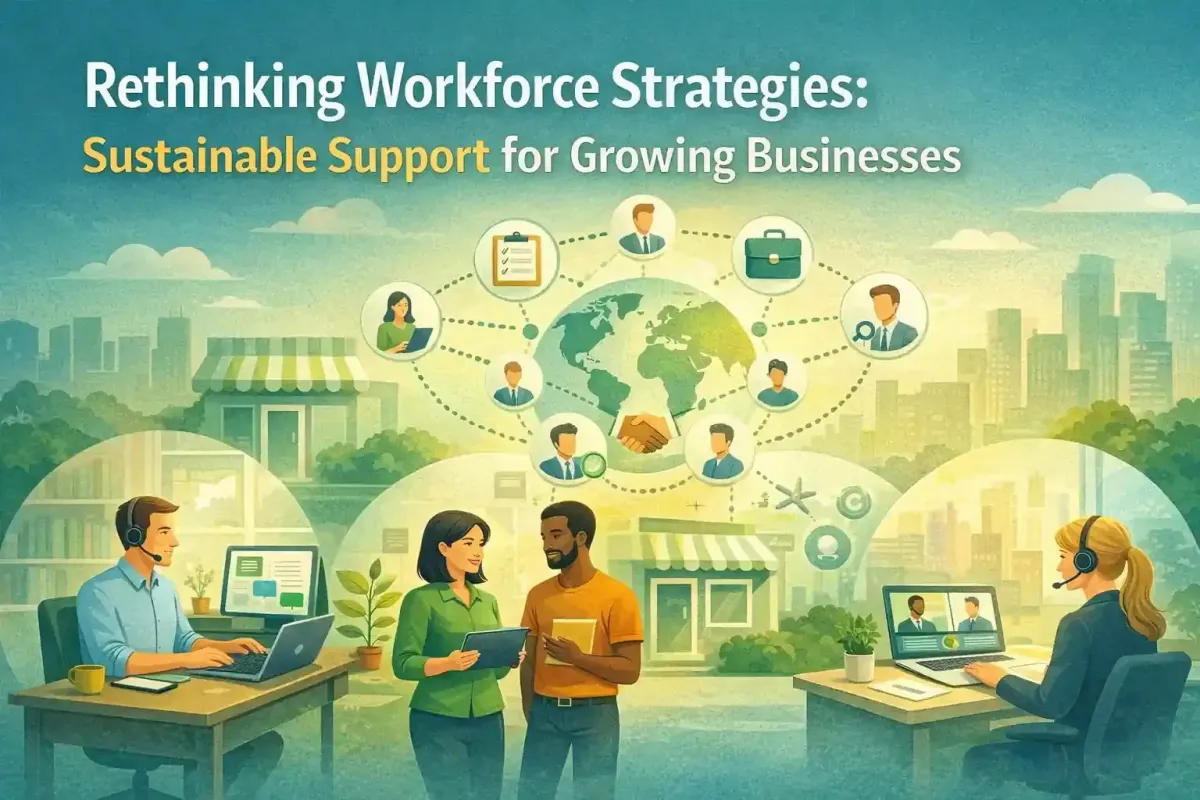
Rethinking Workforce Strategies: Sustainable Support for Growing Businesses
As local enterprises adjust to shifting economic landscapes, the conversation around workforce strategy is evolving beyond traditional hiring. For many small business owners, the question isn’t only how to fill roles, but how to build a resilient structure that can withstand disruptions — from talent shortages to fluctuating demand. In a climate where adaptability has become synonymous with survival, thoughtful workforce planning plays a central role in long-term sustainability.
Across sectors, leaders are reconsidering how work gets done. The onus is no longer just on recruiting but on designing systems that allow for flexibility without sacrificing quality or cohesion. This shift has profound implications for how skills are cultivated, teams are managed, and strategic decisions are made.
Sustainability, often discussed in environmental terms, also has a human dimension. For small businesses, sustainability includes fostering a workforce that is capable, engaged, and equipped to navigate uncertainty. It requires an honest assessment of the roles that are essential, those that could be reimagined, and those that could benefit from external support. Some businesses find that augmenting their in-house capabilities with external expertise helps them scale responsibly without stretching their core team too thin.
In practice, this means looking beyond a local talent pool and experimenting with new modalities of engagement. Not as a cost-saving gimmick, but as a means to enhance operational resilience while preserving the identity and mission of the business.
Skills, Networks, and the New Small Business Ecosystem
Small business owners frequently cite access to skilled talent as a critical barrier to growth. Yet, talent scarcity isn’t simply a numbers issue; it’s about matching specific competencies with strategic needs. A café seeking a social media strategist, a boutique needing help with inventory analytics, or a professional services firm looking to tighten its HR processes — all illustrate the broad spectrum of skills that might not exist within a small team.
In this context, alternative workforce structures are gaining traction. These range from project-based collaborations with specialists to longer-term arrangements that blend remote and in-person participation. Across these models lies a common thread: the importance of integrating external expertise in a way that feels seamless rather than fragmented.
The goal isn’t to replace internal staff, but to complement them where it makes sense. By doing so, businesses are able to retain core competencies in-house while tapping into capabilities that might otherwise be out of reach.
Sustainability here is about balance. It’s about building a workforce where seasonal peaks, specialized projects, and ongoing operational needs can all be managed without constant strain. It’s also about providing opportunities for team members to grow their skill sets, which in turn makes the business more attractive to both current and future talent.
The ripple effects are real. A business that develops strong networks and diverse skills is better positioned to weather downturns, pivot when necessary, and seize opportunities that less prepared competitors might miss.
Practical Perspectives on Long-Term Workforce Planning
Planning for the long haul often means anticipating needs that are not immediately apparent. For example, a startup might realize that its first major challenge won’t be acquiring customers — it will be managing the administrative complexity that comes with growth. For others, the bottleneck might be digital strategy or financial operations.
One emerging approach involves extending a company’s reach to international expertise without the traditional barriers of establishing overseas offices. Organizations that facilitate connections between businesses and global talent are helping to shape a new normal in workforce planning. Through such platforms, firms can assemble skilled contributors across time zones, craft flexible engagement models, and maintain continuity even when local hiring markets are tight. These arrangements serve as a backdrop for entrepreneurs considering small business global expansion, connecting strategy with sustainable execution.
Such models underscore the reality that sustainability isn’t achieved by rigidly adhering to legacy structures, but by thoughtfully integrating diverse resources in ways that reinforce a business’s core mission.
Looking ahead, sustainable workforce strategy will likely continue to blur the lines between local and global, full-time and contingent, internal and external. What remains constant, however, is the need for owners to make deliberate choices about where they invest time, attention, and resources.
For small businesses committed to long-term viability, building resilience into workforce planning isn’t optional — it’s essential. Embracing a broader view of talent and skills positions these enterprises not just to endure, but to thrive.