The Skills Behind Sustainable Digital Marketing Growth
Marketing agencies often focus on outcomes—traffic increases, campaign performance, or measurable engagement. Yet behind those visible results lies a quieter layer: the development of practical skills that shape how teams plan, execute, and refine their work over time. For agencies operating in competitive environments, sustained growth depends less on isolated tactics and more on the capabilities embedded within their teams.
Platforms such as Interlunar Media reflect this shift toward skill-driven growth. Their emphasis on tailored strategies and structured methodologies highlights how marketing work increasingly relies on adaptable knowledge rather than fixed playbooks. As businesses face changing platforms, evolving audience behaviour, and new analytical tools, the value of flexible skill sets becomes more pronounced. Teams that can interpret data, craft narratives, and coordinate across channels tend to build momentum gradually rather than relying on short-term wins.
This emphasis on skills also influences how agencies collaborate with clients. Instead of delivering one-off solutions, they often transfer knowledge—explaining reporting frameworks, outlining content processes, or aligning messaging approaches. These shared capabilities help organisations maintain consistency even after individual campaigns end, strengthening long-term performance.
From Technical Expertise to Integrated Thinking
Digital marketing once separated roles clearly: a content writer produced articles, a paid ads specialist managed campaigns, and a designer handled visuals. While these distinctions still exist, the boundaries have softened. Modern marketing work requires individuals to understand how their contribution fits into a broader ecosystem. A content strategist must consider search intent and analytics; a social media manager may review conversion data; a designer often collaborates on messaging structure.
This integrated thinking emerges through continuous learning. Agencies invest in cross-functional training, shared documentation, and collaborative planning sessions. Over time, these practices cultivate professionals who can adapt to new tools without losing strategic direction. The result is not simply efficiency but resilience—teams become less dependent on single specialists and more capable of responding collectively to change.
The evolution of tools has accelerated this process. Automation platforms, analytics dashboards, and content management systems have lowered technical barriers while increasing the need for interpretation. Skills now revolve around decision-making: choosing which metrics matter, identifying meaningful patterns, and aligning creative work with measurable outcomes. These capabilities cannot be automated entirely; they depend on experience and thoughtful judgment.
Building Competence Through Structured Frameworks
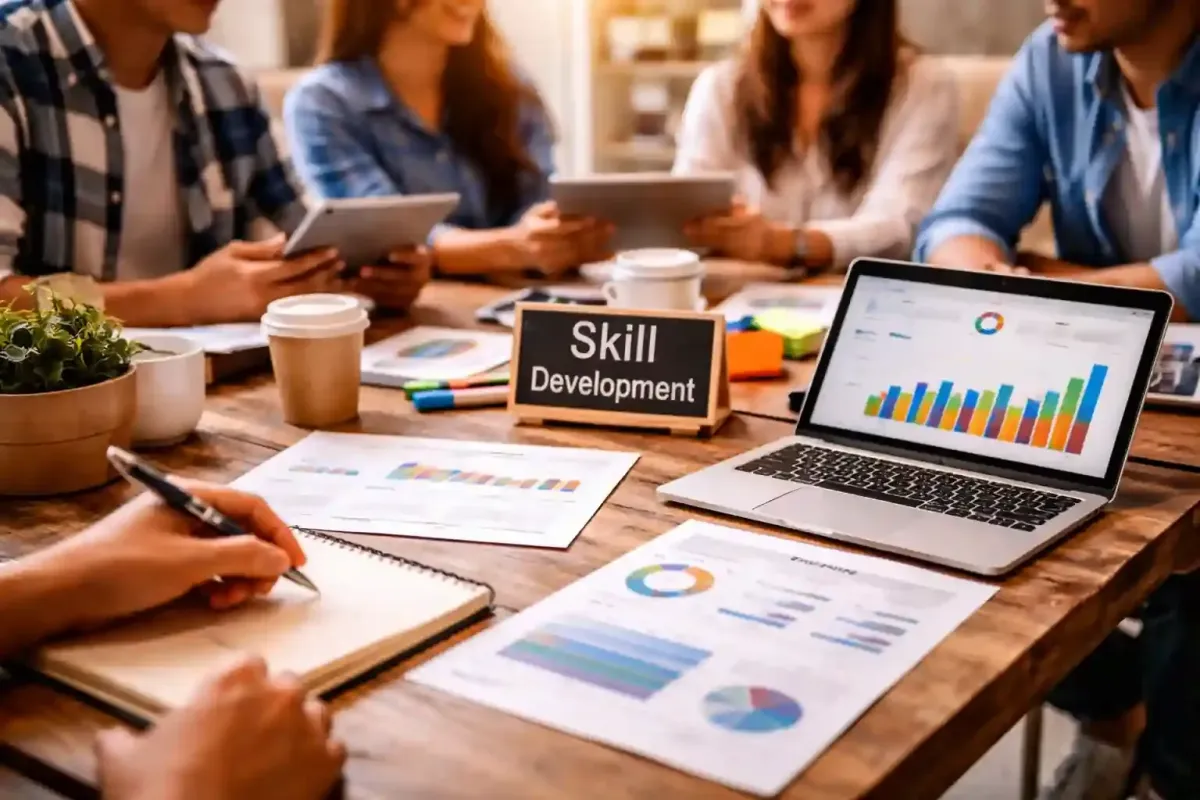
Skill development becomes more sustainable when supported by structured frameworks. Agencies often create internal systems that outline planning cycles, reporting standards, and collaboration methods. These frameworks do not dictate creativity but provide stability, ensuring that each campaign builds on previous knowledge rather than starting from scratch.
Some organisations outside traditional agency models have also explored coordinated environments that help teams align their efforts over time. Concepts sometimes described as marketing strategy for service businesses focus on integrating planning, messaging, and performance tracking into a consistent workflow. Within skill-focused teams, such approaches encourage professionals to understand not only their immediate tasks but also the long-term implications of their decisions.
The benefit of this structure becomes clear during transitions—staff changes, platform updates, or shifts in client priorities. When processes are documented and shared, knowledge remains accessible. New team members can adapt quickly, and experienced professionals can refine existing methods rather than reinventing them. Over time, the organisation’s skill base expands organically.
A Gradual Shift Toward Skill-Led Growth
The growing emphasis on employment and skills reflects a broader transformation within digital marketing. Agencies increasingly recognise that sustainable performance stems from people who understand context, not just tools. This understanding shapes how strategies evolve, how teams collaborate, and how knowledge is retained.
Skill-led growth also influences workplace culture. Continuous learning becomes part of daily operations rather than a separate initiative. Team members exchange insights, experiment with formats, and refine approaches collectively. The process may appear incremental, but it creates depth that supports long-term stability.
As marketing environments continue to change, the organisations best positioned to adapt will likely be those that prioritise capability development. Their progress may not always be dramatic, yet it tends to endure. Through steady investment in skills, agencies build foundations that support both creative exploration and consistent results—quietly reinforcing the role of expertise as the engine behind sustainable digital growth.